
Typically used to give efficient movement of goods and materials, Conveyor systems are very crucial in so many industries. The key element of a conveyor system, the force that drives it, is conveyor pulleys. So, what is a conveyor pulley? How does it work? What makes it such an important component to a conveyor system? Here we will try to answer these questions.
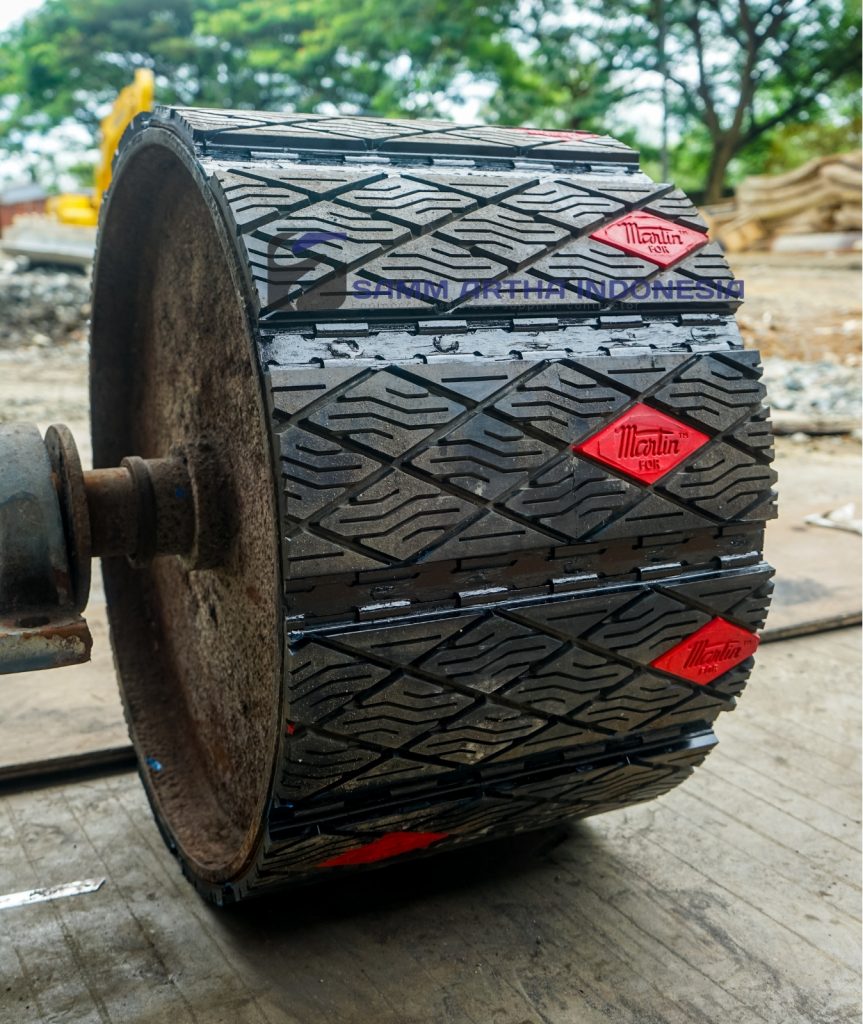
Conveyor pulleys are designed to perform several key functions including changing the direction of the conveyor belt, driving the belt, and providing tension to the belt. They are usually made from strong materials like steel or aluminum. The anatomy of a conveyor pulley consists of cylindrical drum, rolled shells with flexible end discs, and locking assembles. Some conveyor pulleys also have a lagging surface on the shell. The lagging itself can be made of a variety of materials like rubber or ceramic. What the lagging does is to create friction between the pulley and the belt, thus helps to prevent the belt from slipping and increase the life of the belt.
The key roles of conveyor pulleys are to drive, change direction, and give tension to the belt. A pulley can change direction and drive a conveyor system by being placed in strategic spots to guide the belt with the drive pulley as the primary source of motion. In the same system, tail and take-up pulleys give necessary tension and prevent the belt from slipping on the drive pulley, or sagging between idlers.
All in all, conveyor pulleys are the backbone to every conveyor system no matter what the industry is. They are the legs that moves everything to help our industry moving smoothly by giving us the convenience of modern technology.